
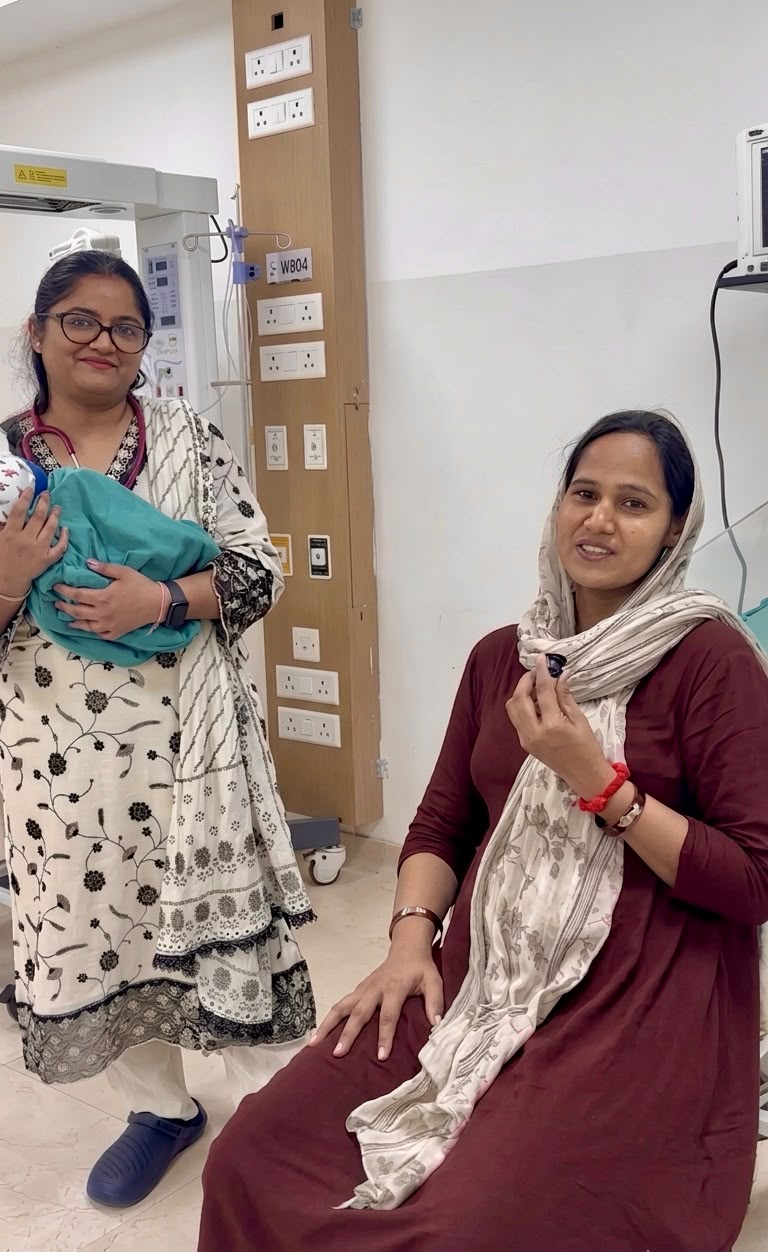
Manisha’s family anxiously welcomed twins at 34 weeks of her pregnancy through an emergency cesarian section and this turned into a resilient story of slow but steady recovery when one of the babies, weighing just around 1.1 kg developed breathing difficulties soon after birth. He was discharged home after nearly a month of specialised neonatal care and monitoring . Baby one was a girl weighing around 2400 grams while the Baby boy was merely 1.1 kg, a huge difference in their weights indicated growth retardation in the weaker twin. At 1.1 kg, the baby fell into the very-low-birth-weight (VLBW) category. Babies born prematurely and with very low birth weight are more vulnerable to problems involving breathing, feeding , temperature regulation, low blood sugar , electrolytes imbalances and infections, particularly during the first few weeks of life.
The baby remained under close medical observation, with the neonatal team monitoring his breathing, feeding tolerance, temperature and weight gain everyday. The focus was on supporting him through the early fragile period while allowing him to gradually develop the strength required for independent feeding and growth.
“A premature baby weighing 1.1 kg requires careful and consistent monitoring, especially during the initial weeks. In this case, the baby had breathing difficulties at the beginning, but responded well to supportive care and showed steady clinical improvement. His gradual weight gain was particularly encouraging, we focussed on minimal handling and kangaroo mother care,” said Dr. Pooja Singh, Consultant in Department of Paediatrics and Neonatology, Silver Streak Multi-speciality Hospital, Gurugram, who managed the baby during his long hospital stay. Over the following weeks, the baby gradually stabilised and was started on necessary supplements while emphasising on expressed breast milk as primary source of nutrition. His weight increased to 1.5 kg while he was kept in skin to skin contact with mother for 2-3 hours everyday.
Once he was considered clinically stable at day of life 30, he was discharged and family was counselled on continuity of care and strict feeding at home, Mother was advised follow up for his growth, vaccination, visual and developmental assessment, and hypospadias ( diagnosed at birth, requiring timely pediatric surgery) at routine intervals For the family, the increase of 400 grams represented much more than a number on the weighing scale—it marked a significant milestone in the baby’s journey from a fragile premature newborn to an independent infant on breastfeeding with intact neurological status.
The family was educated about infection-prevention measures and warning signs requiring immediate medical attention, including breathing difficulty, poor feeding, fever, excessive sleepiness or any sudden change in the baby’s activity.
“Discharge is not the end of care for a premature baby; it is the beginning of an important phase at home. Regular follow-up, adequate nutrition, monitoring of growth and protection from infections are essential for continued recovery and healthy development,” Dr. Singh added.
Prematurity and low birth weight remain important challenges in neonatal care, but advances in neonatal monitoring, respiratory support, nutrition and infection prevention have significantly improved the chances of recovery for many premature babies.
For Manisha and her family, nearly a month of uncertainty finally ended with a reassuring moment. Her consistent involvement in supervised Kangaroo Mother Care and skin-to-skin contact, along with her growing confidence in feeding her premature baby, became an important part of his care.